India’s Position in the Global Pharmaceutical Industry
Introduction
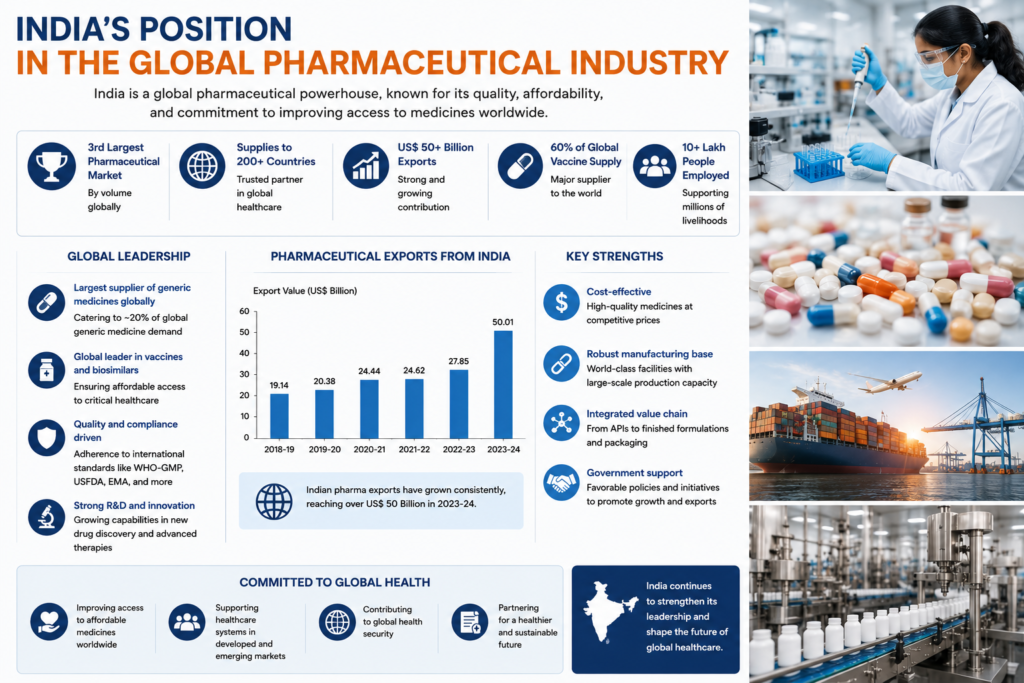
Over the past few decades, India has transformed into one of the most important pharmaceutical manufacturing hubs in the world. Today, Indian pharmaceutical manufacturers play a critical role in global healthcare by supplying affordable, high-quality medicines to more than 200 countries.
India is widely known as the “Pharmacy of the World” because of its ability to produce large volumes of pharmaceutical products while maintaining international quality standards. From generic medicines and active pharmaceutical ingredients (APIs) to specialty drugs, vaccines, and nutraceuticals, Indian pharmaceutical companies have built a reputation for reliability, affordability, and innovation.
Global healthcare systems are under increasing pressure due to rising healthcare costs, aging populations, chronic diseases, and the growing need for affordable medicines. As a result, pharmaceutical distributors, wholesalers, hospitals, pharmacies, government agencies, procurement organizations, and healthcare providers worldwide are increasingly partnering with Indian pharmaceutical manufacturers.
The success of India’s pharmaceutical industry is not accidental. It is supported by strong manufacturing infrastructure, highly skilled professionals, regulatory expertise, advanced research capabilities, international certifications, and extensive export experience.
This comprehensive guide explores why global buyers consistently choose Indian pharmaceutical manufacturers and how these partnerships continue to shape the future of global healthcare.
India’s Position in the Global Pharmaceutical Industry
India has established itself as one of the largest pharmaceutical producers in the world.
The country is recognized for:
Large-scale generic medicine production
Strong export capabilities
Advanced manufacturing infrastructure
Cost-effective pharmaceutical solutions
International regulatory compliance
Indian pharmaceutical companies serve healthcare markets across:
Africa
Asia
Middle East
Europe
Latin America
North America
CIS Countries
This extensive international presence demonstrates the trust global buyers place in Indian manufacturers.
Why India is Known as the Pharmacy of the World
India’s pharmaceutical industry supplies a substantial share of the world’s generic medicines.
Several factors have contributed to this reputation.
Affordable Healthcare Solutions
Indian pharmaceutical manufacturers have made essential medicines more accessible by producing high-quality products at competitive prices.
Millions of patients worldwide benefit from affordable medicines sourced from India.
Extensive Manufacturing Capacity
India has thousands of pharmaceutical manufacturing facilities producing medicines across numerous therapeutic categories.
This extensive capacity allows manufacturers to meet both domestic and international demand efficiently.
Strong Regulatory Framework
Indian pharmaceutical manufacturers operate under strict regulatory oversight and quality control systems.
Compliance with global standards has strengthened international confidence in Indian pharmaceutical products.
1. Cost-Effective Pharmaceutical Manufacturing
One of the primary reasons global buyers prefer Indian pharmaceutical manufacturers is cost competitiveness.
Lower Production Costs
India offers several advantages:
Competitive labor costs
Efficient production processes
Large-scale manufacturing
Strong supply chain networks
These factors enable Indian companies to produce medicines at significantly lower costs compared to many developed countries.
Better Profit Margins for Buyers
Importers and distributors benefit from:
Reduced procurement costs
Improved profitability
Competitive pricing strategies
Expanded market opportunities
This cost advantage is particularly important in price-sensitive healthcare markets.
2. High-Quality Manufacturing Standards
Affordability does not mean compromising on quality.
Indian pharmaceutical manufacturers are known for maintaining internationally recognized quality standards.
WHO-GMP Certification
Many facilities operate under World Health Organization Good Manufacturing Practices (WHO-GMP).
Benefits include:
Consistent product quality
Safe manufacturing environments
Regulatory compliance
Improved patient safety
US FDA Approved Facilities
India has one of the largest numbers of US FDA-approved pharmaceutical manufacturing facilities outside the United States.
This demonstrates a commitment to stringent quality standards.
EU GMP Certification
Many manufacturers also comply with European Union Good Manufacturing Practices, enabling access to highly regulated markets.
Additional Certifications
Common certifications include:
ISO 9001
ISO 14001
MHRA Approval
TGA Approval
These certifications provide confidence to international buyers.
3. Wide Range of Pharmaceutical Products
Indian pharmaceutical manufacturers offer one of the broadest product portfolios in the global healthcare industry.
Generic Medicines
India is the world’s leading supplier of generic medicines.
Popular therapeutic categories include:
Antibiotics
Anti-diabetic medicines
Cardiovascular drugs
Gastrointestinal medicines
Respiratory therapies
Oncology Medicines
Indian manufacturers produce a wide range of cancer treatment products, making oncology therapies more affordable worldwide.
Cardiovascular Medicines
Heart disease treatments remain among the most exported pharmaceutical products from India.
Dermatology Products
Indian pharmaceutical companies manufacture various dermatological formulations including creams, ointments, gels, and tablets.
Nutraceuticals
The growing wellness industry has increased demand for vitamins, minerals, herbal products, and dietary supplements manufactured in India.
Active Pharmaceutical Ingredients (APIs)
India is one of the largest producers and exporters of APIs globally.
Many international pharmaceutical companies rely on Indian API manufacturers.
4. Strong Research and Development Capabilities
Innovation plays an increasingly important role in the pharmaceutical industry.
Indian pharmaceutical companies invest heavily in:
Product development
Process optimization
Formulation research
Clinical studies
These investments help manufacturers remain competitive and responsive to changing market needs.
5. Extensive Export Experience
Global buyers often prefer suppliers with proven international experience.
Indian pharmaceutical manufacturers have decades of expertise in international trade.
Understanding Global Markets
Experienced exporters understand:
Country-specific regulations
Product registration requirements
Documentation procedures
Customs regulations
This knowledge helps buyers avoid costly mistakes.
Efficient Logistics Management
Indian exporters are familiar with:
Sea freight
Air freight
Cold chain logistics
Customs clearance
This experience ensures smooth international shipments.
6. Compliance with International Regulations
Regulatory compliance is critical when sourcing pharmaceutical products.
Indian manufacturers possess significant expertise in managing global regulatory requirements.
Product Registration Support
Many companies assist buyers with:
Product dossiers
Regulatory submissions
Registration documentation
Technical support
This simplifies market entry for importers.
Documentation Expertise
Experienced exporters provide:
Certificates of Analysis
GMP Certificates
Free Sale Certificates
Certificates of Pharmaceutical Product (CPP)
Proper documentation reduces regulatory risks.
7. Reliable Supply Chain Infrastructure
Supply reliability is a key consideration for healthcare organizations.
Indian pharmaceutical manufacturers maintain strong supply chain systems.
Consistent Product Availability
Large production capacities help ensure:
Stable supply
Reduced stock shortages
Better inventory planning
Flexible Manufacturing Capabilities
Manufacturers can often accommodate:
Large-volume orders
Custom packaging
Private labeling
Contract manufacturing
This flexibility benefits distributors and healthcare providers.
8. Skilled Workforce and Technical Expertise
India’s pharmaceutical sector benefits from a highly educated workforce.
Professionals include:
Pharmacists
Chemists
Engineers
Quality specialists
Regulatory experts
Their expertise supports high manufacturing standards and operational excellence.
9. Growing Global Trust and Reputation
Indian pharmaceutical manufacturers have built strong relationships with buyers worldwide.
Several factors contribute to this trust.
Proven Quality Performance
Consistent product quality has strengthened India’s reputation over time.
Regulatory Compliance
Successful inspections and certifications demonstrate commitment to international standards.
Long-Term Partnerships
Many global buyers maintain relationships with Indian suppliers for years due to reliable performance.
10. Opportunities for Private Label and Contract Manufacturing
Many international distributors seek private-label pharmaceutical products.
Indian manufacturers often provide:
Custom branding
Custom packaging
Product development support
Contract manufacturing services
These services help buyers build their own pharmaceutical brands.
Key Benefits for International Buyers
Working with Indian pharmaceutical manufacturers offers numerous advantages.
Lower Procurement Costs
Competitive pricing improves profitability.
Access to Quality Products
International certifications support quality assurance.
Broader Product Selection
Buyers can source multiple product categories from a single supplier.
Regulatory Support
Experienced exporters simplify compliance processes.
Reliable Long-Term Supply
Large manufacturing capacities support sustainable growth.
How to Choose the Right Indian Pharmaceutical Manufacturer
Selecting the right supplier requires careful evaluation.
Verify Certifications
Confirm:
WHO-GMP Certification
Manufacturing Licenses
Export Licenses
Regulatory Approvals
Evaluate Product Portfolio
Choose manufacturers with strong therapeutic coverage.
Review Export Experience
Look for suppliers with proven international success.
Assess Quality Systems
Review testing procedures and quality assurance programs.
Request Documentation
Verify:
COA
CPP
GMP Certificates
Product Dossiers
before establishing partnerships.
Future of Indian Pharmaceutical Manufacturing
The future of India’s pharmaceutical industry remains highly promising.
Key growth drivers include:
Rising global healthcare demand
Aging populations
Expansion of generic medicines
Growth in emerging markets
Increasing healthcare accessibility
India is expected to continue strengthening its position as a leading global pharmaceutical supplier.
Frequently Asked Questions (FAQs)
Why do global buyers prefer Indian pharmaceutical manufacturers?
They offer affordable pricing, high quality, international certifications, and extensive export experience.
Are Indian pharmaceutical products safe?
Yes. Many manufacturers comply with WHO-GMP, US FDA, EU GMP, and other international standards.
What products do Indian pharmaceutical companies export?
Generic medicines, APIs, oncology drugs, cardiovascular medicines, dermatology products, vaccines, and nutraceuticals.
Are Indian pharmaceutical manufacturers cost-effective?
Yes. India’s efficient manufacturing ecosystem supports competitive pricing.
Can Indian manufacturers support product registration?
Many exporters provide technical documentation and regulatory assistance.
What certifications should buyers verify?
WHO-GMP, US FDA, EU GMP, ISO certifications, and manufacturing licenses.
Do Indian companies provide private-label manufacturing?
Yes. Many manufacturers offer private-label and contract manufacturing services.
How can buyers verify supplier quality?
Review certifications, conduct audits, request documentation, and evaluate quality systems.
Which countries import pharmaceutical products from India?
Countries across Africa, Asia, Europe, Latin America, the Middle East, and North America.
Why is India called the Pharmacy of the World?
Because it supplies affordable, high-quality medicines to healthcare systems worldwide.
Conclusion
Indian pharmaceutical manufacturers have become trusted partners for global healthcare organizations due to their ability to consistently deliver affordable, high-quality pharmaceutical products while meeting stringent international standards. Their extensive manufacturing capabilities, broad product portfolios, regulatory expertise, strong supply chains, and commitment to quality make them ideal suppliers for importers, distributors, hospitals, pharmacies, and government agencies.
As global healthcare demands continue to grow, the importance of Indian pharmaceutical manufacturers will only increase. Buyers seeking reliable pharmaceutical sourcing solutions can benefit significantly from partnering with experienced Indian manufacturers that combine quality, affordability, innovation, and global compliance.
Whether sourcing generic medicines, specialty therapies, APIs, nutraceuticals, or private-label products, global buyers continue to choose India as their preferred pharmaceutical manufacturing destination.
Target Keywords
Primary Keyword:
Why Global Buyers Prefer Indian Pharmaceutical Manufacturers
Secondary Keywords:
Indian Pharmaceutical Manufacturers
Pharmaceutical Manufacturer India
Pharmaceutical Export Company India
Pharma Supplier India
Generic Medicine Manufacturer India
Pharmaceutical Export from India
WHO GMP Pharma Company India
Pharmaceutical Products India
Pharma Exporter India
Reliable Pharmaceutical Manufacturer India

